

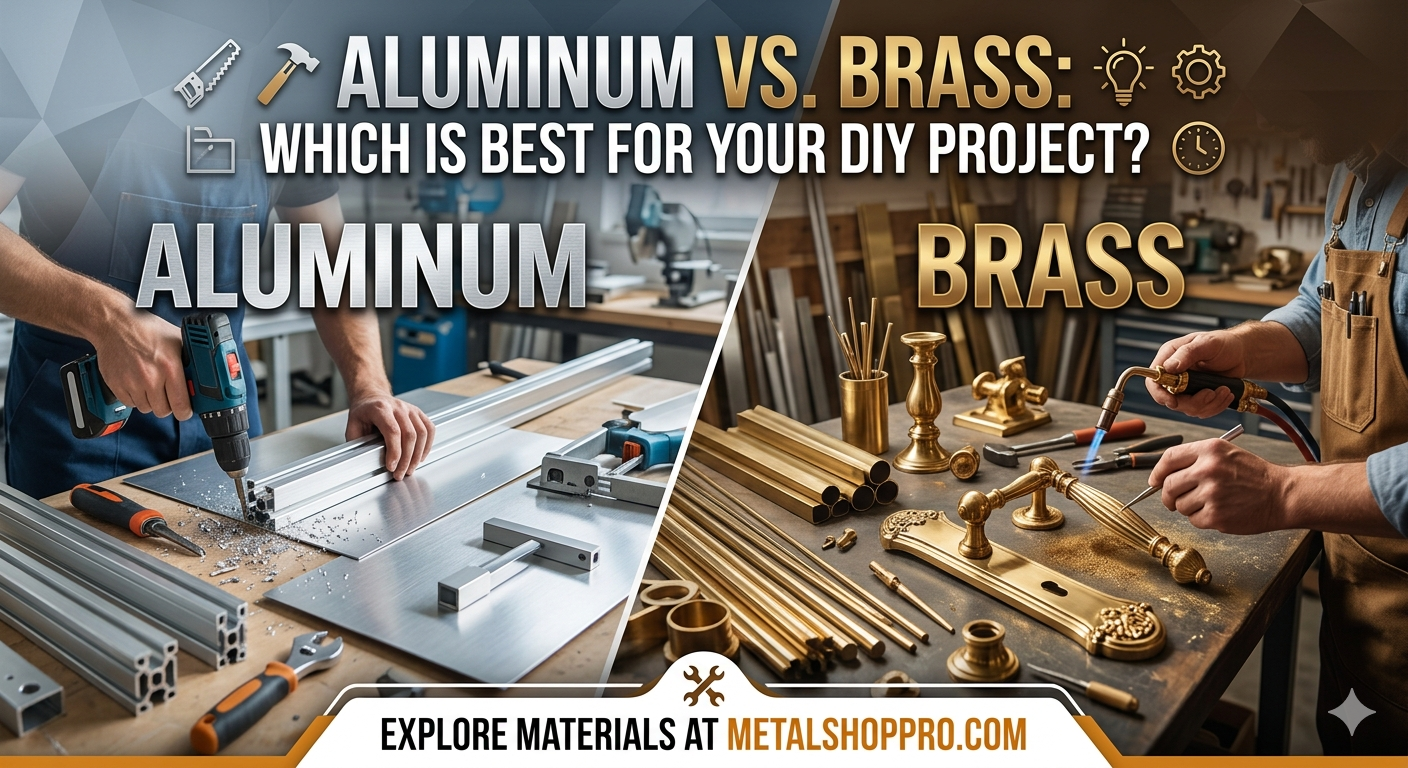
Aluminum vs. Brass: Which is Better for Your DIY Projects? Leave a comment
Choosing the right metal for your home projects or workshop tasks is a critical decision that impacts both the ease of fabrication and the lifespan of the final product. In the DIY world, Aluminum and Brass are two of the most popular contenders, each offering unique advantages.
At metalshoppro.com, we’ve broken down the key differences to help you decide which material is the best fit for your next build.
1. Workability and Shaping
If you are using standard home tools like drills, saws, and sanders, both metals are relatively user-friendly. However, their “feel” is quite different:
- Aluminum: It is softer and incredibly lightweight. It’s very easy to cut and drill, making it perfect for beginners. One tip: because it’s so soft, it can sometimes “gum up” saw blades, so using a lubricant or the right TPI (teeth per inch) is helpful.
- Brass: It is denser and harder than aluminum. It is a dream to work with on a lathe or mill because it produces clean, crisp edges and “chips” away rather than smearing. If your project requires high precision, brass is often the winner.
2. Corrosion Resistance
- Aluminum: It naturally forms a protective oxide layer. This makes it highly resistant to rust and moisture, making it an excellent choice for outdoor furniture, garden fixtures, or automotive DIYs.
- Brass: As a copper-zinc alloy, brass does not rust, but it will develop a “patina” (a brownish or greenish film) over time when exposed to the elements. For an antique or vintage look, this is a plus. If you want it to stay shiny, it will require periodic polishing or a clear lacquer coat.
3. Aesthetics and Style
Often, the choice comes down to the “vibe” of your project:
- Brass: With its warm, gold-like hue, brass adds a touch of luxury and classic elegance. It’s the go-to for custom lighting, furniture hardware, and decorative art pieces.
- Aluminum: It offers a sleek, silvery, industrial look. It fits perfectly in minimalist designs and modern home decor.
4. Weight vs. Durability
- Portability: Aluminum is about one-third the weight of brass. If you are building something that needs to be moved easily—like a camera rig, a drone frame, or camping gear—aluminum is the undisputed champion.
- Toughness: Brass is much heavier and more wear-resistant. It has low friction properties, making it superior for moving parts like gears, locks, or plumbing valves where durability is paramount.
The “better” metal depends entirely on your goal. Choose Aluminum if you want a modern, lightweight, and cost-effective solution for outdoor or structural projects. Choose Brass if you want a timeless aesthetic, superior precision, and heavy-duty durability for decorative or mechanical tasks.
No matter which path you take, you can find the exact dimensions of brass plates, aluminum profiles, and more at metalshoppro.com. Let’s get building!
